New York on Screen: The Films That Get the City Right (And the Ones That Hilariously Don't)
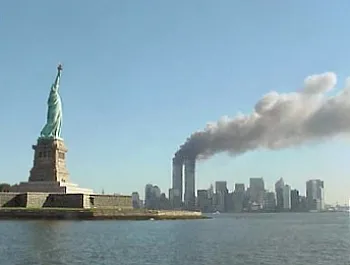
Photo: National Park Service, Public domain, via Wikimedia Commons
New York City has been one of cinema's most enduring obsessions. From the golden age of Hollywood to the gritty '70s classics to today's prestige streaming productions, filmmakers have been trying to bottle the energy of this city for over a hundred years. Some of them come remarkably close. Others produce something that looks like New York the way a snow globe looks like a blizzard — technically related, but not quite the same thing.
At 212Movie, this stuff is personal. The number in our name isn't an accident — it's the original Manhattan area code, and it's our way of saying that this city's relationship with cinema is something we take seriously. So we decided to look critically at how the movies handle New York: the authentic portrayals, the glamorized fantasies, and the films that somehow managed to get it catastrophically wrong while still being great.
What Does "Authentic NYC" Even Mean?
Before we rank anything, it's worth asking what we're actually measuring. New York City is not one thing. It's five boroughs, eight million people, a thousand neighborhoods, and about as many different daily realities. A film that accurately captures the frenetic energy of midtown Manhattan at rush hour is telling a completely different story than one set in a quiet corner of Astoria or the brownstone blocks of Crown Heights.
That said, there are certain qualities that people who live here — or have spent real time here — recognize immediately. The density. The noise. The way strangers interact (or deliberately don't). The subway as a social equalizer. The fact that you can walk three blocks and feel like you've entered a completely different world. The relentless sense that everyone around you is chasing something.
When films get those textures right, New York feels like a character. When they don't, it feels like a backdrop.
The Films That Actually Got It
Midnight Cowboy (1969) remains one of the most viscerally honest portrayals of New York ever committed to film. John Schlesinger shot on location during a period when the city was genuinely fraying at the edges — economically stressed, socially turbulent, and absolutely teeming with the kind of desperate humanity that the film captures without flinching. Dustin Hoffman's Ratso Rizzo is a character so specific to a time and place that he could only exist in this version of New York. It's uncomfortable and true.
Do the Right Thing (1989) is Spike Lee's defining document of Brooklyn — specifically the Bedford-Stuyvesant neighborhood where Lee grew up — and it captures something that most NYC films completely ignore: the way heat, proximity, and history combine to create a pressure cooker. The film is so rooted in the specifics of its block, its community, its summer, that it transcends the genre of "New York movie" entirely. It's just New York.
Uncut Gems (2019) is perhaps the most anxiety-inducing entry on this list, and that's entirely the point. The Safdie Brothers' portrait of a diamond district hustler played by Adam Sandler is relentless in a way that mirrors the city itself — loud, overlapping, exhausting, and impossible to look away from. They shot in actual Diamond District locations, and the claustrophobic energy is completely real. If you've ever navigated Midtown on a weekday, you'll feel it in your chest.
Taxi Driver (1976) is Martin Scorsese working at full intensity, and his New York is grimy, nocturnal, and deeply personal. He's said in interviews that the film was born from his own experience navigating the city's darkness, and that authenticity radiates from every frame. It's not a flattering portrait, but it's an honest one.
The Films That... Tried
Some movies clearly love New York but end up portraying a version of the city that's been softened, simplified, or filtered through a very particular socioeconomic lens.
Breakfast at Tiffany's (1961) is gorgeous and iconic, but its New York is largely a fantasy — a playground for a specific kind of glamorous, well-heeled bohemia that has always represented a tiny fraction of actual city life. It's a beautiful postcard. It's not the city.
You've Got Mail (1998) is a film that New Yorkers have a complicated relationship with. The Upper West Side setting is lovingly rendered, the neighborhood details are real, and Nora Ephron clearly adored the city. But the New York of You've Got Mail is clean, cozy, and almost aggressively conflict-free in ways that feel more like a wish than a reality. Still deeply watchable. Just know what you're getting.
Spider-Man (2002) and its many sequels deserve credit for actually shooting in New York rather than faking it on a soundstage, and some of the aerial city views are legitimately stunning. But the New York of the MCU and Sony's Spider-Man films is ultimately a superhero canvas — a stylized version that prioritizes spectacle over specificity.
The Films That Got It Completely, Wonderfully Wrong
And then there's this category. These films aren't bad — some are genuinely great — but their New York is so far from reality that it functions almost as a separate fictional city that just happens to share the name.
Elf (2003) gives us a New York that's cheerful, navigable, and full of people who are mostly delighted to encounter a large man in tights singing loudly in public. This is not how New York works. And yet: perfect holiday movie.
The Devil Wears Prada (2006) presents a Manhattan that exists almost entirely within the fashion industry bubble — beautiful apartments, seamless cab rides, and a version of the city where the primary struggle is whether your boss approves of your outfit. Real New Yorkers watching this film will note that Miranda Priestly apparently never waits for anything, which alone disqualifies the film from realism.
Crocodile Dundee (1986) is perhaps the most famous entry in this category. Its New York is essentially a theme park version of the city — dangerous enough to feel exotic, friendly enough to be charming, and populated by characters who exist primarily to react to the fish-out-of-water premise. It's delightful. It's also roughly as accurate as a Times Square souvenir shop.
Why It Matters
You might be wondering why any of this is worth analyzing. They're movies, after all — not documentaries.
But here's the thing: for millions of people around the world, films are how they first encounter New York City. The image of this city that lives in the global imagination was largely built on screen. That's an enormous amount of cultural influence, and it shapes expectations, tourism, policy conversations, and even how the city sees itself.
When Spike Lee makes a film about Brooklyn or the Safdie Brothers capture Diamond District chaos, they're doing something more than entertaining — they're creating a record. When a studio produces a cleaned-up, conflict-free version of Manhattan, they're doing something different: building a myth.
Both have their place. But knowing the difference matters — especially if you're a cinema enthusiast who cares about the relationship between storytelling and truth.
At 212Movie, we care about both. The myth and the reality. The fantasy and the grit. Because that tension is exactly what makes this city — and its relationship with cinema — so endlessly fascinating.