Why 12:01 AM Is the Most Powerful Moment in Hollywood
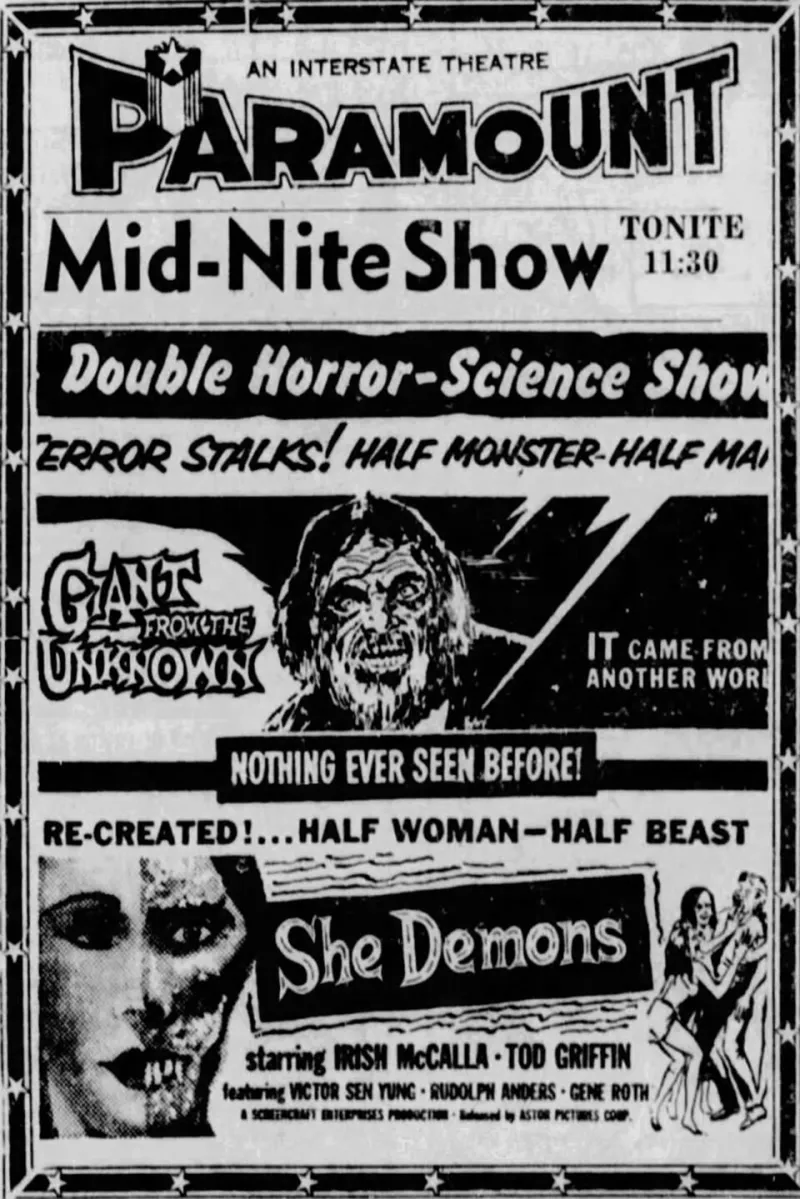
Photo: Astor Pictures, Public domain, via Wikimedia Commons
Picture this: it's a Tuesday night, you've got work tomorrow, and somehow you're standing in a movie theater parking lot at 11:30 PM surrounded by hundreds of people dressed like their favorite characters. Nobody looks tired. Nobody's complaining. If anything, the energy feels closer to a concert than a cinema. That's the midnight premiere — and it's not a happy accident. It's a finely engineered business decision that studios have been quietly perfecting for decades.
So why does Hollywood keep insisting that the best time to watch a $200 million blockbuster is when most of the country is asleep? Turns out, the answer is a lot more interesting than you'd think.
The Clock Starts When the Lights Go Down
Here's the basic math that drives everything. Box office tracking runs on a Friday-to-Sunday weekend cycle, and every dollar counts toward that opening weekend gross. When a studio schedules a 12:01 AM Thursday-night screening — technically the first minutes of Friday — those ticket sales get folded directly into the Friday total. That means a film can rack up millions before most Americans have eaten breakfast.
For a tentpole release, that head start isn't just a vanity metric. Opening weekend performance shapes everything downstream: international rollout decisions, streaming licensing negotiations, sequel greenlight conversations, and the all-important media narrative. A film that opens "big" gets treated like a winner. One that stumbles out of the gate, even slightly, can find itself fighting a perception problem that's hard to shake.
Industry analyst Rebecca Lim, who tracks theatrical performance for a major entertainment data firm, put it plainly in a recent trade interview: "The midnight number is a temperature check on superfan enthusiasm. If that number is strong, you know the core audience showed up. Everything else builds from there."
Piracy: The Problem Nobody Likes to Talk About Loudly
There's another reason studios want content out in the world as fast as possible, and it's one that doesn't get discussed in the glossy press junkets: piracy.
The moment a film exists in any digital form — a screener, a press copy, an early streaming file — it becomes a target. The longer studios wait between a film's completion and its public release, the wider that window of vulnerability. Midnight premieres and simultaneous digital drops are, in part, a race against the clock.
When studios release a film to paying audiences at 12:01 AM, they're essentially flooding the zone. Thousands of people are watching the legitimate version in real time, generating social media chatter, posting reactions, buying merchandise. That organic noise drowns out the signal from pirated copies and makes the bootleg version feel like a lesser experience. You want to be part of the moment, not watching a shaky cam rip alone at 3 AM.
This logic has only intensified in the streaming era. Early digital releases — where a film drops on a platform at midnight Eastern Time — serve the same function. Get the legitimate version in front of as many eyeballs as possible, as fast as possible, before the gray market catches up.
The Superfan Economy Is Real (And Studios Know It)
Let's be honest about who actually shows up to a midnight premiere. It's not casual moviegoers. It's the people who've been counting down the days, who've watched every trailer seventeen times, who've already booked their second viewing for Saturday afternoon. These are the superfans — and they are worth their weight in gold to a studio's marketing operation.
Midnight crowds don't just buy tickets. They generate content. The social media posts, the reaction videos, the Reddit threads, the TikToks of people losing their minds during a big scene — all of that starts rolling out around 2 AM and builds through the morning. By the time the average American checks their phone over coffee, the cultural conversation is already in full swing. That organic hype is essentially free advertising, and it's more credible than any TV spot.
Data backs this up. According to tracking reports from several major releases, films with strong midnight openings tend to outperform their projected weekend estimates more often than those without late-night screenings. The correlation isn't perfect, but it's consistent enough that studios take it seriously.
Streaming's Version of Midnight Magic
The theatrical midnight premiere has a digital cousin that's become increasingly common: the midnight streaming drop. Platforms like Netflix, Disney+, and Max have leaned into the 12:01 AM Eastern release time for high-profile content, and the psychology is nearly identical.
Dropping a season of a major series or a streaming film at midnight means the most dedicated fans start watching immediately. Their reactions hit social media within hours. By morning, the discourse is already rich with opinions, theories, and debate — all of which drives more people to tune in. It's a self-reinforcing loop, and the midnight timestamp is the ignition switch.
For studios releasing films simultaneously in theaters and on streaming, the midnight dynamic gets even more interesting. The theatrical crowd and the streaming crowd are essentially competing to be first, generating parallel conversations that collectively amplify the film's cultural footprint.
Is It Actually Worth Losing the Sleep?
From a pure audience experience standpoint, midnight premieres are a genuinely strange ritual. You're watching a movie when your body is telling you to be horizontal. The popcorn hits different at 12:30 AM. Your emotional reactions are probably heightened by exhaustion in ways you can't fully control.
But that's kind of the point, isn't it? There's something about the shared sacrifice of staying up late — the commitment of it — that makes the experience feel more significant. You didn't just watch the movie. You were there. You were part of the first wave. In a media landscape where everything is theoretically available everywhere all the time, that sense of presence and priority still means something.
Studios understand this on an almost anthropological level. The midnight premiere isn't just a scheduling decision. It's a ritual they're inviting fans to participate in, one that creates memories, builds loyalty, and generates the kind of word-of-mouth that no marketing budget can fully replicate.
The Bottom Line
The 12:01 AM release isn't a quirk of the entertainment industry — it's a strategy with teeth. It front-loads box office performance, suppresses the piracy window, activates the superfan base, and generates organic cultural momentum that carries through the weekend and beyond.
Next time you find yourself bleary-eyed in a theater lobby at midnight, surrounded by people in capes and costumes, remember: you're not just watching a movie. You're participating in one of Hollywood's most carefully engineered moments. And honestly? That's kind of cool.