3 AM and Five Stars: The Weird Psychology of Loving Movies More in the Dark
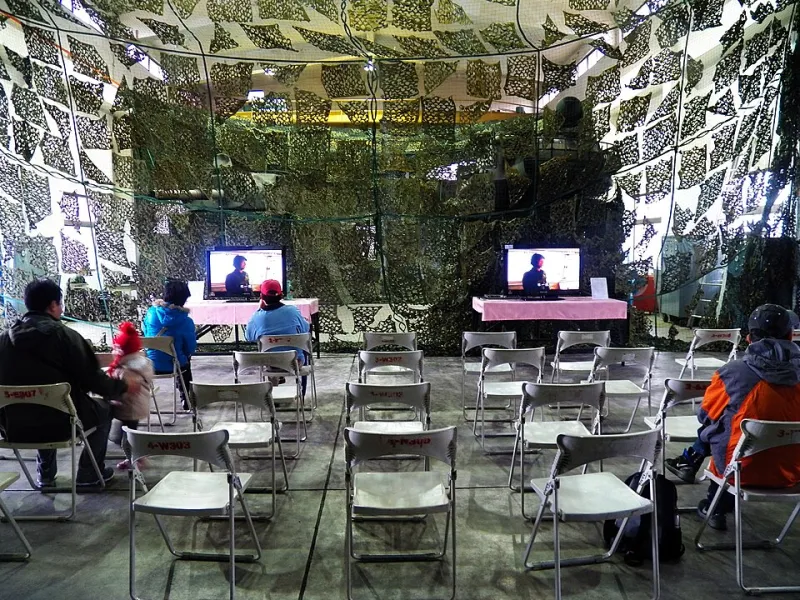
Photo: 玄史生, CC0, via Wikimedia Commons
You've been there. It's somewhere between 1 and 3 AM, the apartment is quiet, the city outside is doing its low-hum thing, and you're thirty minutes into some movie you'd never heard of until tonight. By the time it ends, you're convinced you've just witnessed a cinematic revelation. You text your friend immediately. You give it five stars on Letterboxd. You tell people about it for weeks.
Then you watch it again on a Tuesday afternoon. And something is... off.
This isn't a niche experience. It's one of the most reliably documented quirks of the moviegoing life, and researchers who study both sleep science and cognitive psychology have been quietly building a case for why it happens. The short version? Your brain at midnight is not the same brain you're walking around with at noon. And cinema — more than almost any other art form — knows exactly how to exploit that difference.
Your Critical Filter Has a Bedtime
Here's the foundational piece of this whole puzzle: the prefrontal cortex, the part of your brain most responsible for analytical thinking, skepticism, and what film critics would call "critical distance," starts going offline well before you actually fall asleep. Sleep deprivation research consistently shows that the brain begins deprioritizing executive function as fatigue accumulates — and that process accelerates sharply after midnight for most adults operating on a typical schedule.
What this means practically is that when you're watching a movie at 1 AM, you're doing it with a brain that's significantly less inclined to notice plot holes, question character motivations, or clock the moment a third act falls apart. The machinery that would normally pump the brakes on your enthusiasm is running at maybe sixty percent capacity. You're not dumb — you're just chemically predisposed to be a more generous audience.
Film psychologists sometimes call this the "lowered threshold effect." Emotional content lands harder. Surprise hits different. A moderately effective jump scare becomes genuinely alarming. A decent romantic subplot becomes devastating. The movie isn't doing more work — your defenses are just doing less.
Nostalgia Gets Turbocharged After Dark
Fatigue doesn't just soften your critical edge — it also amplifies emotional encoding, which is the process by which memories get tagged as significant and stored with feeling attached to them. And here's where things get genuinely strange.
Research into memory consolidation suggests that experiences occurring close to sleep are often encoded more intensely, not less. Your brain, preparing to run its nightly file-organization process during sleep, essentially fast-tracks emotionally charged material from the hours right before you close your eyes. So that movie you watched at midnight doesn't just feel good in the moment — it gets archived with an emotional weight that a 4 PM viewing simply wouldn't generate.
This is why so many people have an almost irrational attachment to films they first encountered in late-night circumstances. The movie becomes fused with the memory of that particular kind of quiet, that specific aloneness or togetherness, the feeling of being awake when the world has gone to sleep. Nostalgia researchers call this "context-dependent memory enhancement" — the emotional context of an experience doesn't just color the memory, it becomes structurally inseparable from it.
In plain terms: you're not just remembering the movie. You're remembering being the person who watched that movie at that hour, and those two things have been stitched together into something that feels like proof of the film's greatness.
The False Memory Problem
Here's where it gets a little uncomfortable for those of us with robust Letterboxd histories.
Sleep science has a well-documented relationship with false memory formation. Studies going back decades show that memories formed under fatigue are more susceptible to distortion during the consolidation process — gaps get filled in, emotional tones get amplified or shifted, and the narrative your brain constructs around an experience can diverge meaningfully from what actually happened.
Applied to film watching, this creates a genuinely fascinating phenomenon: people who see movies late at night sometimes remember scenes that were more emotionally resonant than they actually were, endings that felt more earned, performances that hit harder. The movie in their memory is a slightly improved version of the movie that actually played.
This isn't delusion — it's just how memory works under specific conditions. But it does raise an interesting question about the whole enterprise of film criticism and recommendation. If you're telling someone a movie is a hidden gem because you watched it at 2 AM six years ago and it wrecked you emotionally, how much of that recommendation is actually about the film?
So Are Midnight Movies Actually Good?
The honest answer is: sometimes yes, sometimes the conditions made them seem better, and the two things are genuinely hard to separate — which might be the whole point.
There's a real argument to be made that the late-night viewing state is a legitimate mode of film reception, not a compromised one. Cinema has always been about controlled vulnerability — you sit in a dark room and let images and sound do things to you that you'd resist in ordinary daylight consciousness. The midnight mindset, with its softened defenses and heightened emotional sensitivity, might actually be closer to the ideal viewing state that filmmakers are designing toward, not further from it.
Some films seem almost engineered for this. Lynch, Tarkovsky, early Cronenberg — these are directors whose work tends to get better reviews from people who watched them late, alone, slightly out of their minds with tiredness. That's probably not an accident. There's a reason film festivals program their most challenging, formally ambitious work in late slots.
The Rewatch Reckoning
Still, the rewatch is the real test. And the results are genuinely mixed.
Some movies survive it beautifully — you watch them again in daylight and discover that the greatness you felt was real, just waiting to be confirmed. Others deflate in ways that can feel almost personal, like finding out a story you'd been telling about yourself wasn't quite true.
The move that film lovers tend to make, consciously or not, is to protect the midnight version. Keep the memory intact. Don't rewatch the ones that matter most in the wrong conditions. There's a reason certain films become sacred objects — films you only revisit carefully, under the right circumstances, when the city's gone quiet and you can be the right kind of tired again.
Maybe that's not self-deception. Maybe that's just knowing how to take care of something good.
Either way, the next time you're about to give five stars to something you watched at 2 AM, maybe wait until morning before you hit submit. Or don't. Your midnight self probably had good taste. Probably.