Your Brain on Movies After Midnight: The Science Behind Late-Night Cinema Magic
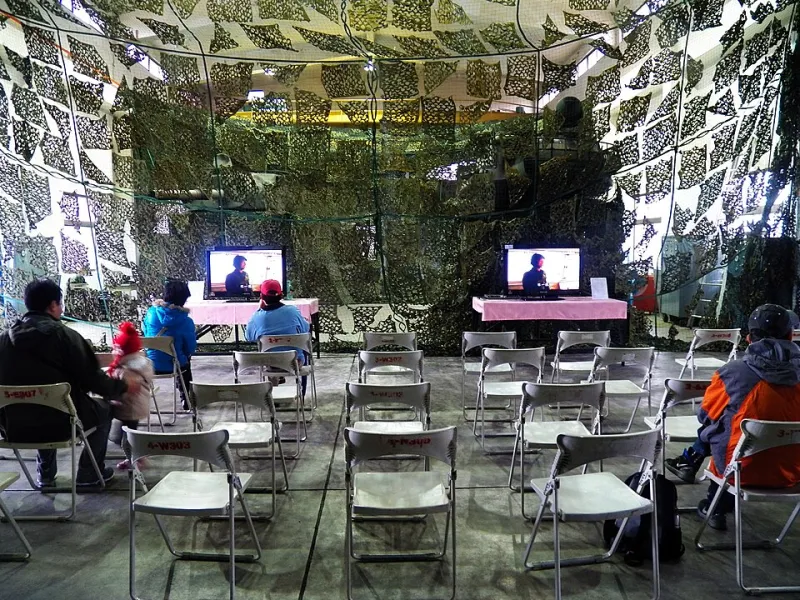
Photo: 玄史生, CC0, via Wikimedia Commons
Something weird happens when you watch a movie late at night. The thriller that got a 58% on Rotten Tomatoes suddenly feels tense in all the right ways. The slow-burn drama you abandoned three months ago at 9 PM now has you completely locked in at 1 AM, tissues nearby. You're not imagining it. There's actual science behind why cinema hits differently once the rest of the world goes to sleep — and it's more fascinating than any plot twist Hollywood has dreamed up.
The Tired Brain Is a More Open Brain
Here's the counterintuitive part: fatigue doesn't just dull your senses. In some very specific ways, it lowers the cognitive walls you'd normally have up.
Dr. Matthew Walker, a sleep scientist at UC Berkeley and author of Why We Sleep, has noted that as the brain grows tired, the prefrontal cortex — the region responsible for critical thinking and rational evaluation — starts to dial back its activity. What fills that gap? Emotion. The limbic system, which governs our emotional responses, keeps humming along even when logic takes a backseat.
Translate that to a movie-watching context and you get something remarkable. The part of your brain that's normally whispering "this plot makes no sense" or "that dialogue is clunky" gets quieter. The part that feels the music swell, that registers the fear or the longing or the grief — that part stays fully online. You're not watching a film with less of your brain. You're watching it with a different configuration of it.
Film psychologist Dr. Pamela Rutledge, director of the Media Psychology Research Center, puts it plainly: "Emotional resonance in cinema depends heavily on our ability to suspend disbelief. Exhaustion accelerates that process. You stop fighting the story and just fall into it."
Darkness as a Sensory Amplifier
Then there's the environment itself. Late-night viewing usually means a darker room, a quieter house, fewer interruptions. Your phone has stopped buzzing. The neighbors aren't mowing. The city — even a city like New York, which prides itself on never shutting up — gets marginally quieter after midnight.
This sensory reduction does something specific to the movie-watching experience. Research on sensory deprivation has long shown that when external stimuli decrease, the brain compensates by amplifying its processing of whatever input remains. In a dark, quiet room, the screen in front of you becomes your entire perceptual world.
This is actually why theaters were designed the way they were in the first place — darkness, enclosed space, controlled sound. Late-night home viewing accidentally recreates those conditions in a way that a daytime watch, surrounded by daylight and ambient household noise, simply can't replicate.
One 212Movie reader, a 34-year-old graphic designer from Brooklyn named Marcus, described it perfectly: "I rewatched Mulholland Drive at like 2:30 in the morning last winter. I'd seen it twice before and thought I understood it. That night it genuinely scared me. Same movie, completely different experience. I don't know if I was more awake or less awake — but I was definitely more in it."
The Nostalgia and Vulnerability Loop
There's another layer here that sleep researchers and therapists have started paying attention to: nighttime is when humans are generally most emotionally vulnerable. It's when anxiety tends to spike, when memories surface, when we process the emotional residue of the day.
This makes late-night cinema a uniquely charged experience. A movie that touches on loneliness, loss, or longing lands harder at midnight than it does at 7 PM on a Tuesday when you're half-thinking about what to order for dinner. The emotional bandwidth is just wider.
Dr. Rutledge points to the concept of "narrative transportation" — the psychological state of being fully absorbed in a story. "Narrative transportation is highest when people are emotionally available and have low cognitive load. Late at night, both those conditions are often met simultaneously."
This explains the 2 AM rewatch phenomenon that so many of us have experienced. You're not watching a better movie. You're watching the same movie as a more emotionally receptive version of yourself.
Jessica, a 28-year-old teacher from Chicago who reached out to us on Instagram, shared her experience rewatching Eternal Sunshine of the Spotless Mind after a breakup: "I'd seen it in college and thought it was good. Watching it at 1 AM after everything fell apart — I had to pause it four times just to breathe. It felt like the movie was written about my life. Which is insane because it's a Jim Carrey sci-fi movie."
The Cult Midnight Movie Tradition and Why It Still Makes Sense
None of this is accidental, by the way. The tradition of the midnight movie — from the original theatrical runs of Rocky Horror Picture Show to the late-night cult screenings that kept films like Eraserhead and El Topo alive — was built on an intuitive understanding of exactly this dynamic.
Filmmakers and exhibitors noticed decades ago that audiences responded to certain films differently in that late-night slot. The communal energy was different. The willingness to accept the strange or the challenging was higher. Midnight screenings became a space for cinema that operated outside the mainstream — not just because of scheduling, but because the audience showing up at midnight was neurologically primed for a different kind of experience.
That tradition has migrated to streaming, where the algorithm doesn't care what time you're watching but your brain absolutely does. The films that reward late-night viewing tend to share certain qualities: atmosphere over plot, mood over exposition, emotional texture over narrative efficiency. Think Nicolas Winding Refn, Claire Denis, early David Fincher. These aren't necessarily difficult films — they're immersive films, and immersion is exactly what a tired, emotionally open, sensory-deprived brain is built for after midnight.
So Should You Save Your Best Films for Last?
Not exactly. There are trade-offs. Complex narratives with intricate plotting — your Inception-style puzzle boxes — might actually suffer from late-night viewing, when working memory is compromised and you're more likely to lose track of structural details. But for films that ask you to feel more than decode, midnight might genuinely be the optimal screening time.
The takeaway isn't to sleep deprive yourself in the name of better cinema. It's to recognize that the viewing context is part of the experience — and that sometimes, the best version of a movie is the one you catch when you probably should have been asleep an hour ago.
Your city never sleeps, and honestly? Neither does your capacity for a genuinely great film experience. Sometimes the best thing you can do for a movie is just let your guard down and let the dark do its work.