Last Screen Standing: The American Towns Losing Their Only Movie Theater
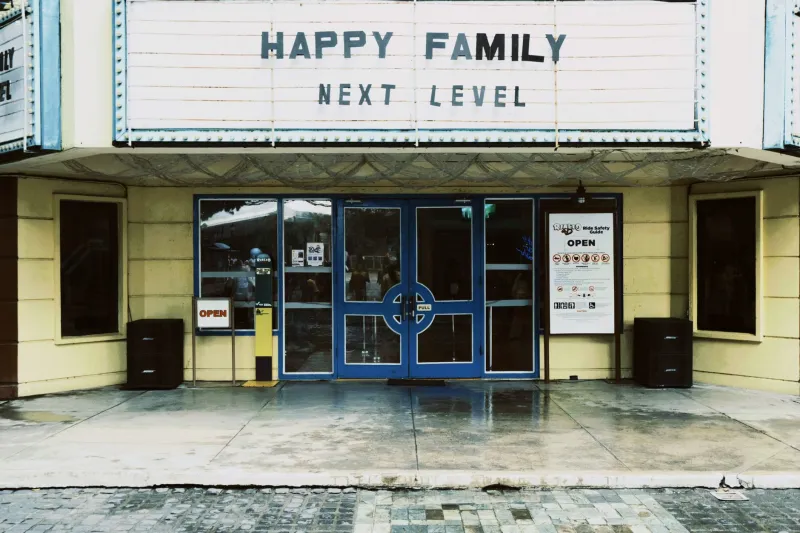
There's a particular kind of silence that falls over a shuttered movie theater. The marquee letters get pulled down one by one. The popcorn machines go cold. The parking lot, once a Friday-night ritual, turns into a ghost town of faded yellow lines and windblown ticket stubs. It's happening in more American communities than most people realize — and the pace is picking up.
This isn't just a story about a struggling industry adjusting to streaming. It's about something more fundamental: the slow disappearance of shared public spaces where strangers sit together in the dark and experience the same thing at the same time. When a city loses its last theater, it loses something that's genuinely hard to replace.
The Numbers Behind the Darkening
Before the pandemic, the United States had roughly 5,800 movie theater locations operating across the country. By the end of 2023, that figure had dropped to somewhere closer to 4,800 — a loss of around a thousand venues in just a few years. That sounds like an industry restructuring. But zoom into the map, and a different picture emerges.
The closures aren't evenly distributed. Major metropolitan areas — New York, Los Angeles, Chicago — still have plenty of screens. You can catch a midnight IMAX showing in Manhattan without much effort. But in smaller cities and rural counties, the math is brutal. When a single-screen theater in a town of 12,000 people closes, there's no backup. The nearest alternative might be a 45-minute drive on a two-lane highway. For families without reliable transportation, that's not a minor inconvenience — it's a full erasure of access.
Researchers and industry watchdogs have started using the term cinema deserts to describe communities where no commercial movie theater exists within a reasonable distance. By some estimates, more than 30 million Americans now live in one.
Chain Bankruptcies and the Domino Effect
The structural problems go back further than COVID, but the pandemic cracked the foundation wide open. Cineworld, the parent company of Regal Cinemas — once the second-largest theater chain in the US — filed for Chapter 11 bankruptcy in 2022. The reorganization led to the permanent closure of dozens of locations, many of them in mid-sized markets that had no other options.
AMC, the biggest chain in the country, survived largely through a combination of meme-stock investor enthusiasm and aggressive refinancing, but it shed locations along the way. Smaller regional chains, which had been quietly serving communities that the big players ignored, found themselves squeezed between rising operating costs, reduced film product during the strikes, and audiences who'd gotten comfortable watching everything at home.
The domino effect is real. When a major chain pulls out of a mid-sized market, it often takes the real estate with it — long-term leases, purpose-built buildings, specialized equipment. Independent operators who might want to step in face a capital barrier that's simply too high for most.
Who Gets Left Behind
The demographics of cinema deserts tell a specific story. Rural communities, lower-income suburbs, and small cities in the Midwest and South are disproportionately affected. These aren't places where people don't want to go to the movies — survey data consistently shows that enthusiasm for theatrical cinema remains strong across income levels and geographies. The desire is there. The access isn't.
For older residents and teenagers without cars, the local theater often served a social function that streaming genuinely cannot replicate. It was a place to go, not just something to watch. The loss registers differently when you're 16 years old in a town of 8,000 with no public transit and suddenly the one thing you could do on a Saturday night is gone.
Minority communities in urban neighborhoods are also feeling the squeeze. As chains consolidate around high-traffic suburban multiplexes, inner-city locations — which often served as cultural anchors — get cut first. The economics make a certain cold sense to a CFO. The community impact is something else entirely.
The Survival Stories Worth Watching
Here's where it gets more complicated, and honestly more interesting. Because for every theater that's going dark, there's at least one story of creative resistance worth paying attention to.
Independent theaters have shown a remarkable resilience in markets where you'd least expect it. Places like the Loft Cinema in Tucson, the Bijou in Knoxville, and dozens of similar venues have built loyal audiences by doing exactly what the chains stopped doing: curating programming, hosting events, and treating moviegoing as a community experience rather than a content delivery transaction. These spots aren't just surviving — some are genuinely thriving.
Pop-up cinema is another model gaining traction. Organizations in several states have started running traveling screening programs that bring films to communities without permanent venues — setting up in parks, community centers, even repurposed warehouses. It's not a full replacement for a real theater, but it's keeping the habit alive in places where it might otherwise die out completely.
Municipal governments in a handful of cities have started treating theaters the way they treat libraries — as public infrastructure worth subsidizing. It's a radical idea by American standards, but it's one that's gaining quiet support among local officials who've watched their downtowns hollow out.
What Hollywood Owes These Communities
The studios haven't been entirely absent from this conversation, but their responses have been mostly inadequate. Exclusive theatrical windows — the period during which a film can only be seen in a theater before hitting streaming — have been shortened dramatically since 2020. That's great for convenience. It's terrible for theaters in markets where a film's theatrical run is already compressed by limited showtimes and smaller screens.
If the major studios genuinely believe theatrical exhibition matters — and their awards campaigns certainly suggest they do — then the economic structures they've built need to reflect that. Revenue sharing models, marketing support for independent exhibitors, and longer windows for non-blockbuster titles in underserved markets are all levers that haven't been seriously pulled.
The Stakes Are Bigger Than Box Office
It's easy to frame the theater closure story as a business problem with a business solution. But that framing misses something essential. Cinema, at its best, is a civic experience. It puts people in the same room with different backgrounds, different opinions, different lives, and asks them to feel something together. That's not nothing. That's actually quite a lot.
The cities and towns losing their last screens aren't just losing a weekend activity. They're losing a specific kind of public life that's already under pressure from a hundred different directions. When 212Movie says your city never sleeps, we mean the culture stays alive, restless, and hungry for stories. But that only holds if the places where those stories get told are still standing.
Right now, a lot of them aren't. And the clock is running.