Pocket-Sized Cinema: How the Morning Commute Became Hollywood's Most Competitive Screening Room
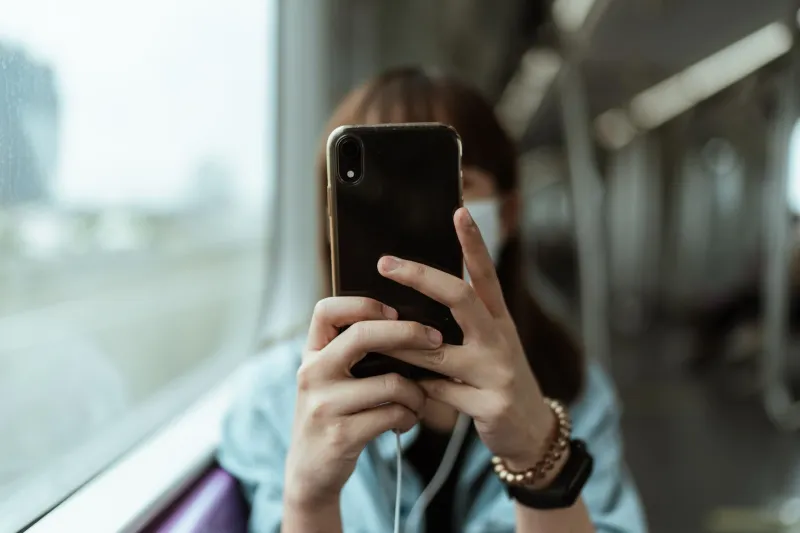
Picture the 8:15 A train barreling under Manhattan. Half the car has headphones on. A few people are reading. But most of them — and you know this because you've done it yourself — are watching something. A show, a clip, a trailer, or maybe an actual movie squeezed into the window between 72nd Street and Columbus Circle. That 22-minute stretch of underground time has quietly become one of the most contested real estate spaces in the entertainment industry.
Hollywood noticed. And it's changing everything.
The Screen in Your Pocket Is Now the Screen That Matters
For decades, studios optimized their product for two environments: the multiplex and the living room couch. Aspect ratios, sound design, pacing — all of it was calibrated for big screens or at least medium ones. Then smartphones became genuinely good video players, data plans got cheap, and commuters across the country turned their transit time into personal screening rooms.
The numbers back this up hard. Mobile video consumption in the US has grown year over year for nearly a decade straight. Nielsen data consistently shows that a significant chunk of streaming hours happen on phones — and a disproportionate slice of that mobile viewing occurs during morning and evening commute windows. Studios can see exactly where and when you're watching. And what they're seeing is reshaping what gets greenlit.
This isn't just about short-form content anymore. It's about how full-length films are being designed with the phone screen as a primary — not secondary — canvas.
TikTok Trained Your Brain, Whether You Like It or Not
Let's be honest about something uncomfortable: TikTok didn't just change marketing. It changed how audiences process narrative. The platform's three-to-five minute storytelling loop — hook in the first two seconds, payoff before you scroll — has genuinely reconditioned viewer expectations, especially for younger demographics who grew up swiping.
Streaming platforms are paying close attention. Netflix, in particular, has been vocal about the "first-minute problem" — the idea that if a film or show doesn't grab a viewer immediately, they're gone. That pressure was always there in some form, but mobile commute viewing makes it existential. Nobody on a crowded subway car is giving your slow-burn arthouse drama a 20-minute runway to find its rhythm.
The result? Screenwriters are feeling pressure — sometimes subtle, sometimes explicit — to front-load their narratives. Cold opens are more important than ever. The traditional three-act structure hasn't died, but it's getting compressed at the edges, with inciting incidents arriving earlier and expository breathing room shrinking.
Vertical Video and the Quiet Reframing of Cinema Grammar
Here's where things get genuinely fascinating from a filmmaking standpoint. Vertical video — the 9:16 format native to phone screens held upright — was once dismissed as amateur content. Now it's a legitimate aesthetic choice that major platforms are experimenting with.
Some streaming originals have been shot with dual compositions in mind: a traditional widescreen cut for TVs and a reframed vertical version optimized for mobile. This isn't cropping. It's re-editing, sometimes re-shooting, with a completely different visual grammar. Close-ups become more powerful. Wide establishing shots lose their purpose. The human face, already cinema's most magnetic subject, becomes even more dominant when you remove the horizontal real estate around it.
Snapchat pioneered this with its Discover content years ago. But the practice is creeping upward into more serious narrative territory. Directors who came up through Instagram and TikTok are bringing vertical instincts to their feature work — and some of the resulting choices are genuinely interesting, even if they make traditionalists nervous.
Marketing Has Already Fully Made the Shift
Even if you're skeptical that feature filmmaking will fundamentally change, the marketing side has already crossed the Rubicon. Movie trailers are now routinely cut in vertical formats for social distribution. Poster design accounts for mobile thumbnail legibility. TikTok campaign strategies often drive more opening-weekend ticket sales than traditional TV spots for certain demographics.
The viral clip economy means studios are now seeding specific scenes — not just trailers — into the commute scroll. A 90-second moment from a film drops on TikTok at 7 AM on a Tuesday, gets shared by a few big accounts, and by the time the evening rush hour hits, millions of people have watched it on their phones between stops. That clip becomes the conversation. The movie becomes a destination for people who want more of what they already liked.
It's a fundamentally different relationship between audience and film than anything Hollywood operated with before 2016. The movie doesn't introduce itself to you in a theater — it meets you on the subway first.
What Gets Lost (And What Surprisingly Doesn't)
There's a real cost to all of this, and it's worth naming plainly. Certain kinds of cinema simply don't survive the pocket-screen translation. Films built around landscape, around sonic architecture, around the cumulative weight of silence — they lose something profound when compressed onto a phone speaker and a six-inch display. Watching Dunkirk on a subway car is not watching Dunkirk. It's a different experience with the same title card.
The concern isn't just aesthetic snobbery. If studios increasingly greenlight projects based on their mobile-commute viability, the films that require scale and immersion to work will get harder to finance. That's a legitimate loss for cinema as an art form.
But here's the counterintuitive part: some genres are thriving in this environment in ways nobody predicted. Character-driven comedies, intimate dramas, and dialogue-heavy thrillers actually translate remarkably well to small screens. The emotional core of a great performance doesn't need a 40-foot screen to land. A perfectly written exchange between two actors in a single room can hit just as hard on a phone as anywhere else — maybe harder, because you're holding it inches from your face.
The City That Never Sleeps Watches Everywhere
For a city like New York, where the average commuter spends well over an hour a day underground, this shift is particularly acute. The subway is already a kind of collective cinematic space — people watching different things simultaneously, headphones creating individual screening rooms in a shared car. It has its own strange intimacy.
Studios know that a New York commuter who discovers a film during their morning ride and tells three coworkers about it by 10 AM is worth more than a dozen billboard impressions. The commute is word-of-mouth incubation. It's where films build their early audiences or quietly die.
Hollywood is designing for that moment now. Whether that's exciting or alarming probably depends on where you prefer to watch movies — and how you feel about a future where the theater in your pocket increasingly calls the shots for the theater on the corner.
Either way, the train is already moving.